Flow-Induced Vibrations (FIV)

Predicting and Mitigating Vibration Risks in Fluid-Structure Systems

Flow-Induced Vibrations (FIV) occur when unsteady fluid forces interact with structures, causing oscillations that can lead to fatigue failure, acoustic noise, or structural damage. These phenomena are critical in the design and operation of piping systems, tube bundles, process equipment, and civil infrastructure. At ENA2, we use advanced CFD and fluid–structure interaction (FSI) simulations to predict and mitigate vibration risks across industrial and architectural applications.

Simulation Capabilities

Flow-Induced Vibrations (FIV) can lead to structural fatigue, noise, and potential failure in process and civil infrastructure. At ENA2, we employ an advanced fluid–structure interaction (FSI) approach combining Computational Fluid Dynamics (CFD) and Finite Element Analysis (FEA) to analyze, predict, and mitigate these effects with high accuracy. Our simulations cover both external aerodynamic loads and internal fluid excitation, supporting design decisions across a range of industries.

Transient CFD for Unsteady Flow Resolution

We utilize high-fidelity transient CFD solvers to capture unsteady flow phenomena that give rise to dynamic loading, including:

  • Vortex shedding and flow separation around bluff bodies such as pipes, towers, and cables.
  • Turbulent pressure fluctuations impacting surfaces and inducing oscillatory forces.
  • Resolution of Strouhal frequency behavior for identifying resonance with structural natural modes.

This provides the foundational input for assessing FIV risk in structures where periodic or broadband flow excitation is critical.

CFD–FEA Coupled Simulation (FSI)

For accurate prediction of deformation, stress, and dynamic response, ENA2 performs two-way coupled Fluid–Structure Interaction (FSI) analyses:

  • Fluid forces computed from CFD simulations are passed in real time to structural models in FEA solvers.
  • Structural displacements are returned to the fluid domain to update the boundary conditions.
  • Enables modeling of flexible elements, structural damping, and realistic nonlinear response under flow loading.

This methodology is especially valuable for analyzing vibration-prone geometries such as long-span piping, slender bridges, wind-exposed façades, and tensioned cables.

High-Rise and Civil Structure Aerodynamic Loading

ENA2 provides advanced aerodynamic simulations for tall and slender structures subjected to wind loads:

  • Prediction of galloping, flutter, and vortex-induced vibrations in high-rise buildings, chimneys, transmission towers, and architectural projections.
  • Use of time-dependent wind profiles and turbulence intensity parameters to replicate realistic atmospheric boundary layer effects.
  • Computation of aeroelastic response and structural fatigue accumulation under repeated loading cycles.

These simulations help inform design optimization, damping strategies, and compliance with wind codes (e.g., ASCE 7, NBCC).

Tube Bundle and Heat Exchanger Vibration

Cross-flow over tube arrays can lead to FIV in heat exchangers, steam condensers, and boiler banks. ENA2 evaluates:

  • Fluid-elastic instability due to coherent vortex shedding and alternating lift forces across tube rows.
  • Influence of support spacing, damping ratio, and flow velocity on vibration amplitude and frequency.
  • Identification of critical velocities, resonance risks, and tube wear/failure locations.

Our simulation results help clients improve support design, tube layout, and operational safety of critical thermal equipment.

Applications and Industry Use

Mechanisms of Flow-Induced Vibrations

Our FIV analysis covers a wide range of mechanisms, including:

Vortex-Induced Vibrations (VIV)

Vortices shed alternately from bluff bodies like tubes, chimneys, towers, or building corners, creating periodic lift forces that can excite resonance in structures. This is especially critical for:

  • Heat exchanger tubes
  • Tall chimneys, transmission towers, and wind-exposed structures
  • High-rise buildings and bridges
Acoustic-Induced Vibrations (AIV)

Pressure waves generated by rapid valve actuation, high-velocity gas flow, or pressure relief devices can cause high-frequency excitation of piping or vessel walls.

Turbulence-Induced Vibrations (TIV)

Random pressure fluctuations due to turbulent flow interact with flexible or unsupported structures, leading to fatigue damage over time.

Evaluation Metrics and Deliverables

Our analysis yields engineering data critical for design validation and reliability:

  • Time-resolved pressure and force spectra from CFD
  • Vibration amplitudes and resonance risk based on structural modes
  • RMS and peak fluctuating pressures
  • Erosion or fatigue risk at supports, elbows, and junctions
  • Recommendations for vortex suppression (e.g., helical strakes, tuned mass dampers, baffling, bracing)

Applications and Industry Use

Building, Facility & Construction

Wind loading and vibration on tall buildings, bridges, chimneys, antenna towers, and stadium roofs

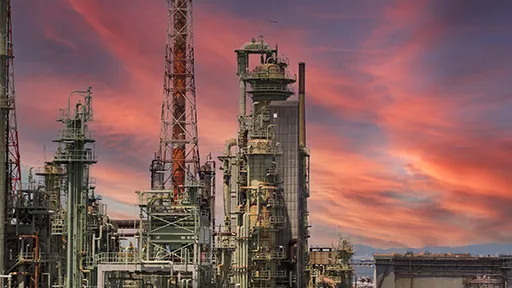
Oil & Gas

Relief systems, vibrating piping, heat exchanger failures

Power Generation

Steam piping, boiler internals, condenser tubes

Infrastructure, Energy & Materials

Agitated vessels, column internals, compressor lines

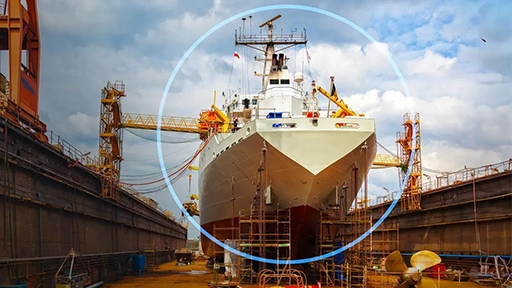
Marine & Offshore

Riser VIV, submerged piping, mooring lines, and SPAR structures

ENA2’s erosion analysis helps clients design more durable systems, reduce maintenance frequency, and prevent operational failures. With physics-based modeling and validated empirical methods, we ensure accurate predictions of erosion behavior in even the most demanding flow environments.

Case Studies

Software Availability

Interested in Flow-Induced Vibrations (FIV)?
Enhance structural integrity, minimize downtime,

and ensure compliance with our expert

Flow-Induced Vibrations (FIV) analysis

Contact Us

Fill out the form below, and we will be in touch shortly.