Fracture mechanics, crack growth, and failure modeling
Modeling Fracture and Failure with Abaqus Training
This 3-day advanced Abaqus training course helps engineers and analysts model fracture, crack growth, material damage, and failure in structural components. Participants learn how to apply fracture mechanics concepts in Abaqus, calculate stress intensity factors and contour integrals, model cohesive behavior, simulate low-cycle fatigue crack growth, and use XFEM, VCCT, and focused meshes for fracture studies.
duration
24 Hours / 3 Days
Level
Advanced
Location
Online, Hybrid, or In-Person
Course Objectives
By the end of this course, participants will understand key Abaqus workflows used to model fracture mechanics, crack growth, material damage, and failure behavior in structural components.
- Use proper modeling techniques to capture crack-tip singularities in fracture mechanics problems
- Use proper modeling techniques for finite-strain (nonlinear) fracture mechanics problems
- Use Abaqus/CAE to create meshes appropriate for fracture studies
- Calculate stress intensity factors and contour integrals around a crack tip
- Simulate material damage and failure
- Simulate crack growth using cohesive behavior, VCCT and XFEM
- Simulate low-cycle fatigue crack growth
COURSE CONTENTS
-
1Basic Concepts of Fracture Mechanics
-
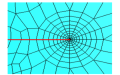
2Fracture Analysis of Sharp Cracks
-
3General Fracture Analysis
-
4Material Failure and Wear
-
5Element-based Cohesive Behavior
-
6Surface-based Cohesive Behavior
-
7Virtual Crack Closure Technique (VCCT)
-
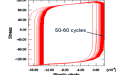
8Fatigue Crack Growth
-
9Mesh-independent Fracture Modeling (XFEM)
-
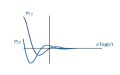
A1Other Fracture Mechanics Techniques
-
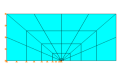
A2Focused Mesh with Keywords
Knowledge Prerequisites
Introduction to Abaqus or equivalent and experience using Abaqus.
Who is this fracture and failure course designed for?
This course is designed for engineers, analysts, CAE users, and simulation teams who need to model fracture mechanics, crack growth, material damage, and failure behavior using Abaqus. It is best suited for users who already have a working foundation in Abaqus and finite element analysis.
What fracture and failure topics are covered?
Participants work with fracture mechanics concepts, crack-tip singularities, stress intensity factors, contour integrals, cohesive behavior, material damage, VCCT, XFEM, fatigue crack growth, and focused mesh techniques for fracture studies.
How is this course different from Introduction to Abaqus?
Introduction to Abaqus focuses on foundational modeling and analysis workflows. This advanced course focuses specifically on fracture mechanics, crack growth, cohesive behavior, damage initiation, damage evolution, and failure modeling techniques in Abaqus.
What practical skills will participants develop?
Participants will learn how to prepare fracture models, create appropriate meshes, calculate fracture parameters, simulate material damage and failure, evaluate crack growth, and use Abaqus fracture modeling techniques such as VCCT, XFEM, and cohesive behavior.
How can the course be customized for our team?
ENA2 can tailor the course based on your team’s applications, preferred dates, experience level, and technical priorities. Customized sessions can focus on pressure equipment, mechanical components, welded structures, fatigue crack growth, cohesive behavior, XFEM, VCCT, or specific fracture and failure workflows.
How do we arrange training for our team?
Share your preferred delivery format, estimated number of participants, target dates, and the fracture or failure modeling topics your team wants to focus on. ENA2 will review your training needs and recommend the most suitable course format for your team.