Evaporation & Condensation Analysis

Simulating Phase Change for Optimized Thermal Systems

Phase change processes such as evaporation and condensation are fundamental to thermal management, power generation, refrigeration, and chemical processing systems. Accurate modeling of these phenomena is essential for predicting system performance, heat transfer rates, flow stability, and equipment reliability. At ENA2, we perform advanced Evaporation & Condensation Analysis using CFD to simulate boiling, condensation, and multiphase interactions under realistic operating conditions.

Simulation Capabilities

Boiling and Evaporative Cooling

We simulate:

  • Pool boiling: Bubble nucleation, growth, and detachment from heated surfaces
  • Flow boiling: Liquid vaporization within channels and tubes under forced convection
  • Film evaporation: Surface evaporation from thin liquid films or exposed liquid layers

Our models capture dry-out, critical heat flux (CHF), and vapor film formation, allowing performance predictions under high thermal loads.

Vapor fraction in the chamber due to evaporation

Condensation Modeling

We assess:

  • Filmwise condensation: Condensate layer buildup and drainage, common in steam systems and power plants
  • Dropwise condensation: Discrete droplet formation for high-efficiency condensation
  • In-tube and external condensation scenarios typical of HVAC coils, desuperheaters, or refrigerant lines

These simulations support the design of surfaces, inclination angles, and drainage paths for maximum heat transfer.

Multiphase and Phase Change Interfaces

We use advanced methods to capture vapor-liquid interactions:

  • Volume of Fluid (VOF) – Tracks interface motion between immiscible fluids
  • Eulerian Multiphase – Resolves each phase as an interpenetrating continuum for high-fidelity mixing models
  • Phase Change Source Terms – Model latent heat exchange between phases during evaporation or condensation

This allows precise control over interface location, flow regime, and mass transfer dynamics.

Saturation Temperature and Wall Heat Flux Coupling

We dynamically couple:

  • Saturation pressure and temperature behavior
  • Wall-to-fluid heat transfer based on local thermal gradients
  • Latent heat exchange at the interface

This ensures accurate prediction of evaporation fronts, condensation zones, and superheated/subcooled regions.

Applications and Industry Use

Purpose and Importance

Understanding evaporation and condensation behavior is critical for:

Heat Transfer Enhancement 

Maximizing efficiency in heat exchangers, evaporators, condensers, and boilers

Design Validation 

Predicting phase change rates, saturation zones, and fluid distribution

System Safety and Reliability 

Preventing dry-out, flooding, vapor lock, and water hammer

Energy Efficiency 

Optimizing thermal cycles and minimizing irreversibilities in refrigeration and power systems

Evaluation Metrics and Deliverables

Our phase change analysis provides clear engineering insights for system design and optimization:

  • Vapor-liquid interface evolution and phase fraction distribution
  • Local and global heat transfer coefficients
  • Boiling curves and critical heat flux predictions
  • Film thickness, drainage behavior, and condensate accumulation
  • Saturation and subcooling temperature profiles
  • Recommendations for enhancing surface geometry, flow rates, and operating conditions

Applications and Industry Use

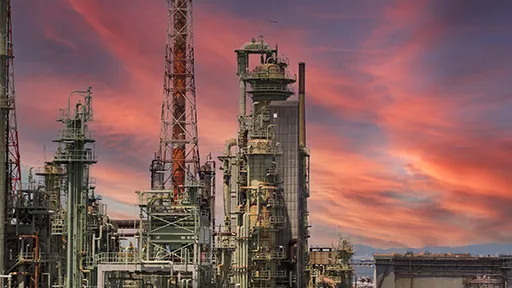
Oil & Gas

Reboilers, desuperheaters, distillation columns, and flash tanks

Power Generation

Steam cycle condensers, economizers, and boiler evaporators

Infrastructure, Energy & Materials

Vapor chambers, heat pipes, solar stills, desalination units, and phase change thermal management systems

Manufacturing and Industrial Equipment

Evaporator and condenser coils, DX systems, and cooling towers

By simulating real-world conditions and capturing complex thermofluid interactions, ENA2’s evaporation and condensation analyses help clients design high-performance systems that are efficient, reliable, and thermally balanced—while minimizing failure risks associated with uncontrolled phase change behavior.

Case Studies

Software Availability

Interested in Evaporation & Condensation Analysis?
Design high-performance, efficient, and

reliable systems with our expert evaporation

and condensation analysis

Contact Us

Fill out the form below, and we will be in touch shortly.