
API 579 Fitness-for-Service assessment fundamentals
FITNESS-FOR-SERVICE ANALYSIS LEVEL 1 & 2 ASSESSMENTS TRAINING
This Fitness-for-Service training course helps engineers, inspectors, and analysts evaluate the integrity of pressure vessels, piping, and industrial assets using API 579 Level 1 and Level 2 assessment methods. Participants learn how to interpret inspection data, understand key damage mechanisms, and apply structured FFS procedures for continued safe operation.
duration
8 Hours / 1 Day
Level
Beginner-Friendly
Location
Online, Hybrid, or In-Person
Course Objectives
By the end of this course, participants will understand how Level 1 and Level 2 Fitness-for-Service assessments support practical asset integrity decisions for pressure equipment and piping systems.
- Understand the role of API 579 in Fitness-for-Service and asset integrity management
- Interpret inspection reports, material data, operating history, and equipment records
- Apply Level 1 and Level 2 assessment logic for common damage mechanisms
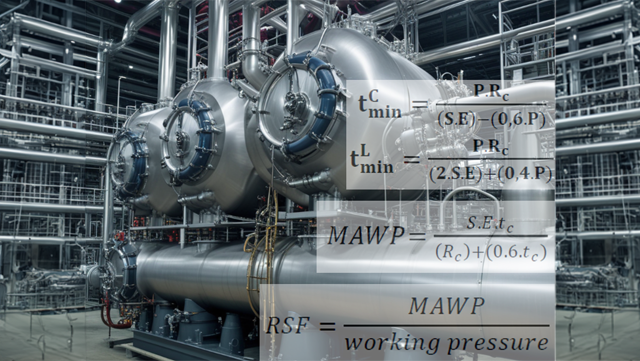
- Evaluate general metal loss and localized metal loss from corrosion or erosion
- Understand brittle fracture risks in existing pressure equipment
- Assess crack-like flaws and their impact on structural integrity
- Review dents, gouges, and dent-gouge combinations in piping and equipment
- Understand fatigue damage and long-term performance considerations
- Identify high-temperature concerns for components operating in the creep range
COURSE CONTENTS
-
1
Introduction to Fitness-for-Service and API 579
-
2
Asset Integrity Data: Inspection Reports, Materials, and Operating History
-
3
Level 1 and Level 2 Assessment Approach
-
4
Brittle Fracture Assessment
-
5
General Metal Loss Evaluation
-
6
Localized Metal Loss from Corrosion and Erosion
-
7
Crack-Like Flaw Assessment
-
8
Components Operating in the Creep Range
-
9
Dents, Gouges, and Dent-Gouge Combinations
-
10
Fatigue Damage and Long-Term Performance Evaluation
Knowledge Prerequisites
No formal prerequisite is required. Basic familiarity with pressure equipment, piping systems, inspection reports, material properties, or mechanical integrity concepts is helpful.
FITNESS-FOR-SERVICE LEVEL 1 & 2 ASSESSMENTS FAQ
Who should attend the Fitness-for-Service Level 1 & 2 Assessments course?
This course is designed for engineers, inspectors, analysts, fixed-equipment reliability professionals, plant engineers, and asset integrity teams involved in evaluating pressure vessels, piping systems, and industrial equipment.
What is covered in this Level 1 & 2 Fitness-for-Service course?
The course covers API 579 assessment concepts, inspection data review, material and operating history, general and localized metal loss, brittle fracture, crack-like flaws, creep-range components, dents, gouges, and fatigue damage.
Is this course focused on API 579?
Yes. The course is built around Fitness-for-Service assessment concepts based on API 579 guidance. It helps participants understand how Level 1 and Level 2 assessments are used to support safe operation decisions for industrial assets.
What is the difference between Level 1 and Level 2 FFS assessments?
Level 1 assessments are typically more conservative screening evaluations, while Level 2 assessments use more detailed calculations and data. This course helps participants understand when each level may be used and how assessment results support engineering decisions.
Do I need Abaqus or FEA experience for this course?
No. This Level 1 & 2 course focuses on Fitness-for-Service assessment fundamentals and does not require Abaqus or finite element analysis experience. Participants who need FEA-based assessment training may also consider ENA2’s Fitness-for-Service Analysis with Abaqus course.
Can this course be customized for our team?
Yes. ENA2 can customize this course based on your team’s equipment types, inspection methods, damage mechanisms, industry requirements, and project-specific Fitness-for-Service assessment needs.