
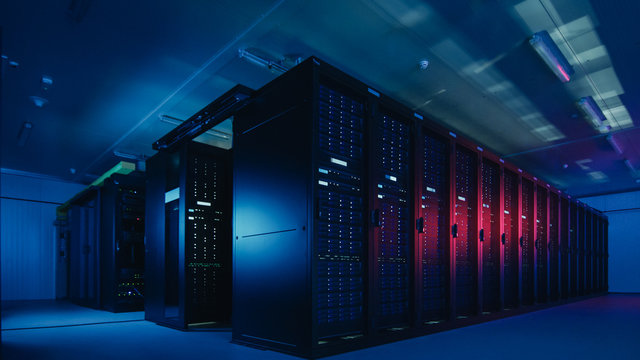
Data Center CFD Analysis Services for Airflow & Cooling
ENA2 provides engineering-led CFD analysis for data center cooling, airflow, liquid cooling and equipment thermal performance. We evaluate room-level airflow, HVAC distribution, direct-to-chip cooling, immersion cooling and equipment-level thermal behavior to identify performance limitations and support design and operational decisions.
Data Center CFD for Cooling Performance & Troubleshooting
ENA2 provides CFD engineering consulting for new data center designs, existing facilities, higher-density deployments and cooling performance problems. Each study is defined around the specific airflow, cooling or thermal-performance decision the project needs to resolve.
CFD resolves three-dimensional flow and temperature behavior, allowing project teams to evaluate design options, investigate performance limitations and compare proposed changes before implementation.
Data Hall Airflow & Thermal CFD Analysis
Data hall cooling performance depends on how supply air reaches the racks and how heated exhaust air returns to the cooling system. CFD resolves airflow and temperature distribution throughout the room to identify localized cooling limitations that may not be visible from overall cooling capacity alone.
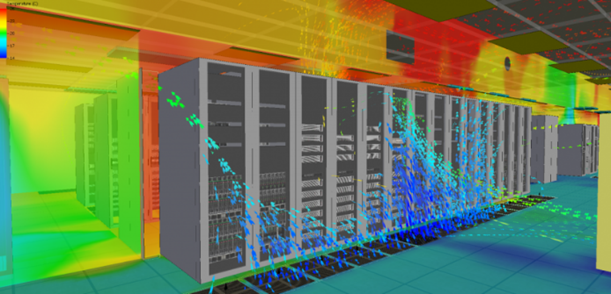
Resolve Airflow & Thermal Conditions at Rack Level
Evaluate how cooling air reaches IT equipment, how heated exhaust moves through the data hall and where airflow or temperature conditions may limit cooling performance.
Data Center HVAC & Air Distribution CFD Analysis
Cooling performance depends on how air is delivered, distributed and returned through the facility. CFD can evaluate the interaction between air-handling equipment, ducts, plenums and terminal devices to identify airflow imbalance and distribution limitations.
Evaluate Cooling-Air Delivery Through the Facility
Assess how the HVAC and air-distribution system delivers cooling air to the data hall and how pressure losses and system resistance influence airflow distribution.
Data Center Liquid Cooling CFD Analysis
High-density and AI computing can require heat removal closer to the equipment. CFD can evaluate coolant distribution, pressure loss and heat transfer through direct-to-chip and immersion cooling systems.
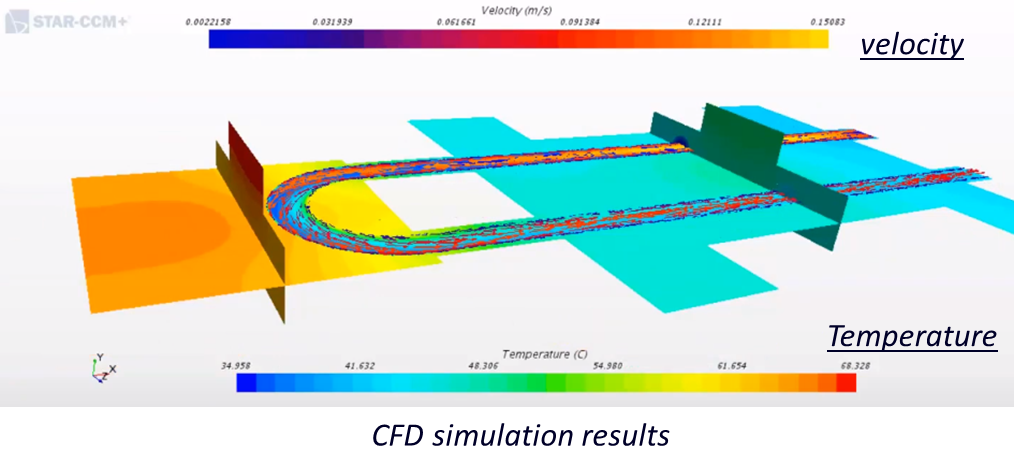
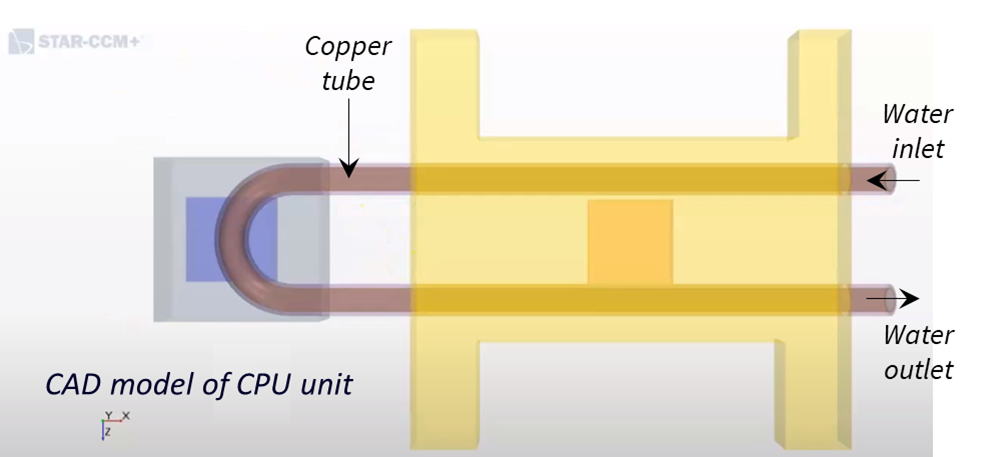
Direct-to-Chip Liquid Cooling & CDU Analysis
We model coolant flow from the Coolant Distribution Unit (CDU) through rack manifolds and cold plates to identify uneven flow, excessive pressure loss and localized thermal conditions.
Immersion Cooling CFD Analysis
CFD can evaluate how coolant circulation and heat transfer develop throughout the tank and around heat-generating equipment.
Coolant Circulation
Natural or forced circulation and coolant distribution throughout the tank.
Thermal Performance
Tank temperature distribution, server heat dissipation and localized hot spots.
Transient & Phase Change Cases
Transient thermal response and two-phase or boiling behavior where applicable.
Equipment & Enclosure Cooling CFD Analysis
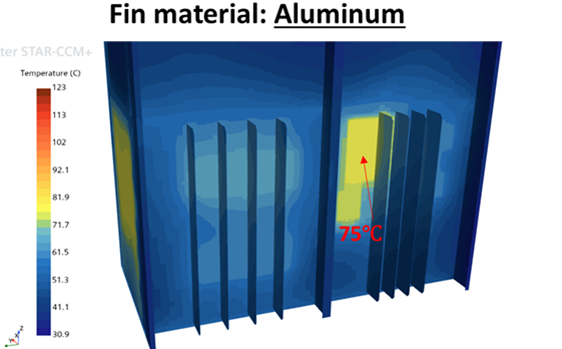
Equipment-level CFD resolves airflow and heat transfer inside servers, electrical equipment and enclosures where room-level conditions alone may not explain localized component temperatures or cooling limitations.
Resolve Local Cooling Conditions Inside Equipment
Evaluate internal airflow, heat transfer and localized thermal conditions within equipment and electrical enclosures.
Cooling System Components CFD Analysis
CFD can be applied to individual cooling-system components where local geometry affects flow distribution, pressure loss, mixing or heat transfer performance.
Heat Exchangers
Flow distribution, pressure drop and heat transfer through defined heat-exchanger geometry.
Cooling Coils
Airflow distribution and thermal performance through cooling-coil configurations.
Headers & Manifolds
Flow distribution and balancing between parallel branches and connected flow paths.
Cooling Towers
Airflow and thermal performance within defined cooling-tower conditions.
Tanks
Coolant circulation, mixing and temperature stratification within storage or process tanks.
Evaluate Cooling Performance Beyond the Baseline Condition
Cooling performance can change as heat loads increase, equipment availability changes or cooling capacity is reduced. CFD can compare defined operating scenarios and show how airflow and temperatures respond.
Baseline Operation
Establish the reference airflow and temperature condition for the modeled system.
Higher Heat Loads
Evaluate how increased rack or equipment heat loads affect temperatures and required heat removal.
Reduced Cooling Capacity
Assess defined cases with reduced cooling output or unavailable cooling equipment.
Transient Cooling Events
Evaluate temperature response during defined startup, shutdown or loss-of-cooling scenarios.
When to Use Data Center CFD Analysis Services
Data center CFD is most valuable when the project has a specific cooling, airflow or thermal performance decision to make. Common applications include new facilities, higher-density deployments, modifications to existing systems and investigation of operating problems.
New Design
Is airflow and cooling performance adequate before the layout is fixed?Compare rack airflow, temperature distribution, containment and cooling configurations before equipment and layouts are finalized.
AI & High-Density Deployment
How will higher heat loads affect air or liquid cooling?Evaluate higher equipment heat loads, rack-level thermal conditions and the performance of air or liquid-cooling approaches.
Retrofit & Expansion
What changes when racks, cooling equipment or layouts are modified?Compare proposed changes against the existing condition before modifications are implemented.
Troubleshooting
Where are hot spots, recirculation or flow imbalance originating?Investigate observed cooling problems and identify the airflow or thermal conditions contributing to them.
What You Receive from a Data Center CFD Study
Deliverables are structured around the engineering question and the decisions the CFD study is intended to support.
Model Setup & Assumptions
Geometry, heat loads, operating conditions, boundary conditions and scenarios used in the model.
Flow & Thermal Results
Velocity, airflow, temperature, pressure drop and heat transfer results relevant to the study.
Governing Conditions
The locations, operating cases or flow conditions that control system performance.
Assessment & Recommendations
Interpretation of the results, identified concerns and practical next steps within the agreed CFD scope.
Start With the Data You Have
A complete CFD model is not required for the first discussion.
We can start with the available project information, identify the inputs needed for the model and define the CFD scope around the specific cooling or performance question.Geometry & Layout
Rack layout, aisle configuration, containment, ducts, plenums and equipment locations.
Heat Loads
Rack power, equipment heat loads and relevant operating conditions.
Air-Side Data
AHU, CRAH, CRAC, fan, diffuser, grille or filter information where available.
Liquid Cooling Data
CDU, manifold, cold-plate, coolant flow and temperature information where applicable.
Measured Conditions
Available temperature, airflow or pressure measurements from the existing system.
Operating Scenarios
Baseline operation, proposed changes and defined off-design or reduced-capacity cases.
Data Center CFD Analysis FAQ
Common questions about data center CFD services, airflow, HVAC, liquid cooling and equipment thermal analysis.
What is data center CFD analysis?
Data center CFD analysis uses numerical flow and heat transfer models to predict how air or coolant moves through a defined system and how temperatures develop. It can be applied at room, cooling-system or equipment level depending on the problem being investigated.
What does ENA2 cover in data center HVAC analysis?
ENA2 evaluates CRAH and CRAC units, AHUs, ducts, plenums, diffusers, grilles, pressure drop and airflow balancing using CFD. This page focuses on CFD-based airflow and thermal performance analysis rather than full HVAC or MEP system design.
Can CFD identify hot spots, recirculation and bypass airflow?
Yes. CFD can show rack airflow, hot spots, recirculation paths, bypass airflow, containment performance and temperature distribution within the modeled data hall.
What information is needed to start a data center CFD project?
The required inputs depend on the study scope. Typical information includes geometry or layouts, rack and equipment heat loads, airflow or coolant data, equipment information, operating conditions and available temperature, airflow or pressure measurements.
Can CFD analyze hot aisle and cold aisle containment?
Yes. Hot aisle and cold aisle arrangements can be evaluated for airflow separation, recirculation, bypass and the resulting rack inlet temperature conditions.
Can ENA2 analyze direct-to-chip liquid cooling, CDUs and cold plates?
Yes. CFD can evaluate direct-to-chip cooling, CDUs, manifolds and cold plates, including flow balance, pressure drop, heat transfer and localized temperature behavior.
Can ENA2 evaluate immersion cooling with CFD?
Yes. CFD can evaluate coolant circulation, temperature distribution, heat transfer and transient or phase-change behavior where applicable to the defined immersion-cooling study.
Can CFD analyze cooling inside equipment and electrical enclosures?
Yes. Equipment-level CFD can evaluate airflow and thermal behavior inside servers, UPS and PDU equipment, switchgear, power electronics, battery systems and electrical enclosures.
Need CFD Analysis for a Data Center Cooling Project?
Send us the project information you already have. Our CFD engineers can review the cooling issue, available inputs and operating conditions and help define the analysis needed for your project.