
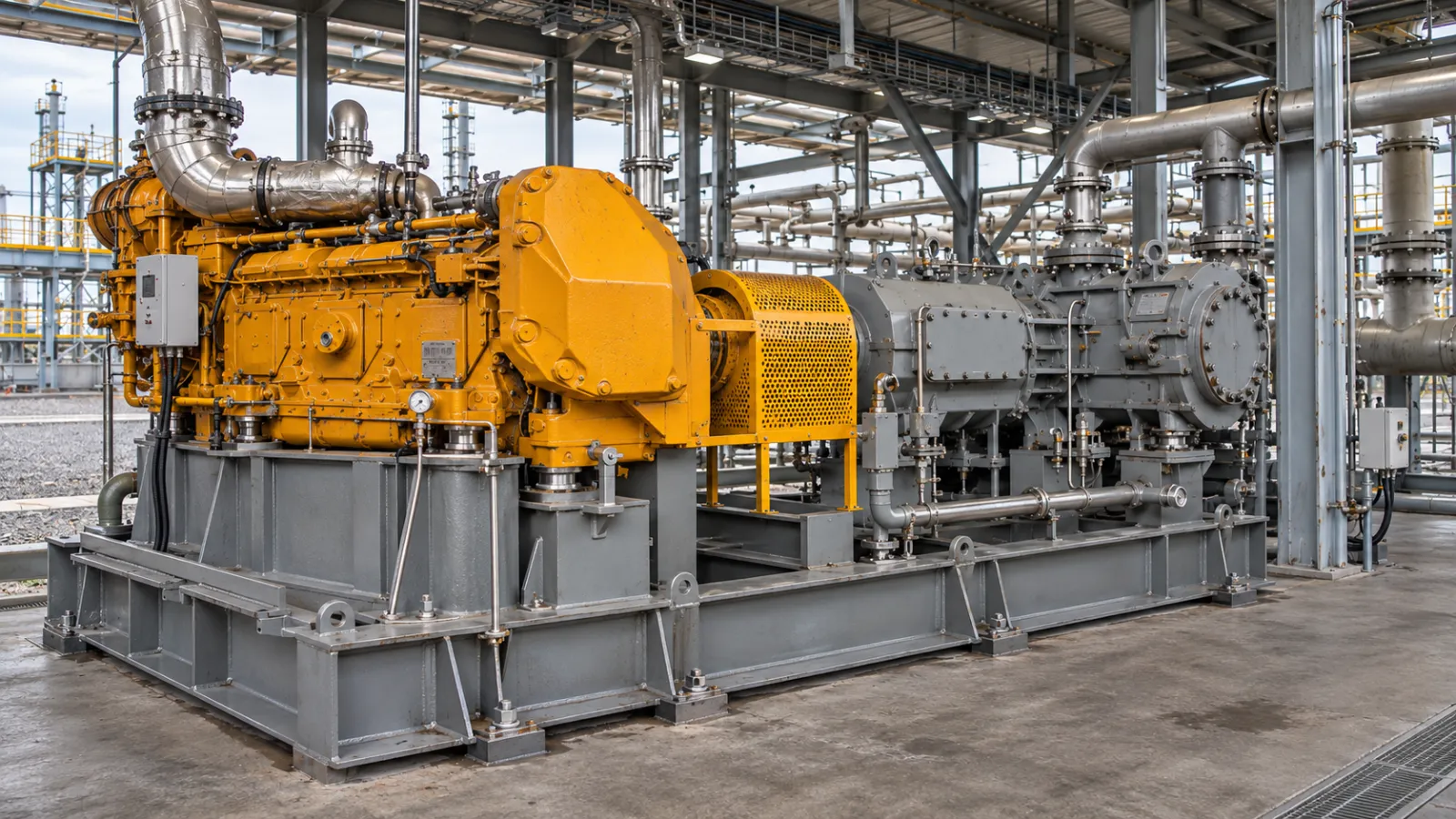
Vibration-Induced Weld Fatigue Cracking on a Reciprocating Compressor Skid
A stiffener weld cracked on a heavy skid carrying a reciprocating compressor and engine. ENA2 used natural frequency, harmonic and detailed connection FEA to trace the cracking to excessive vibration, then developed a revised stiffener detail that resolved the cracking.
Tracing Stiffener Cracking on a Compressor Skid to Its Cause
In brief: The analysis confirmed that excessive vibration caused the weld cracking, and the revised stiffener detail ENA2 proposed resolved the problem.
Cracking appeared at a stiffener location on the skid, and excessive vibration was the suspected cause. ENA2 Innovative Consulting Inc., a Calgary-based engineering consulting firm, carried out a compressor skid vibration analysis and a detailed weld fatigue check of the cracked connection as part of its equipment structural analysis services.
Reciprocating engines and compressors apply cyclic forces to the frame that carries them. When a skid responds strongly to those forces, welded details such as stiffener connections see repeated stress cycles, and fatigue cracks can start at the weld.
From Skid Model to Weld Fatigue Check
ENA2 first analyzed the whole skid for natural frequencies and harmonic loading, then applied the resulting member forces to a detailed FEA model of the cracked stiffener connection. The skid-level vibration analysis covered the global, dynamic side of the problem (see our vibration analysis services), and the weld fatigue check covered the local side.
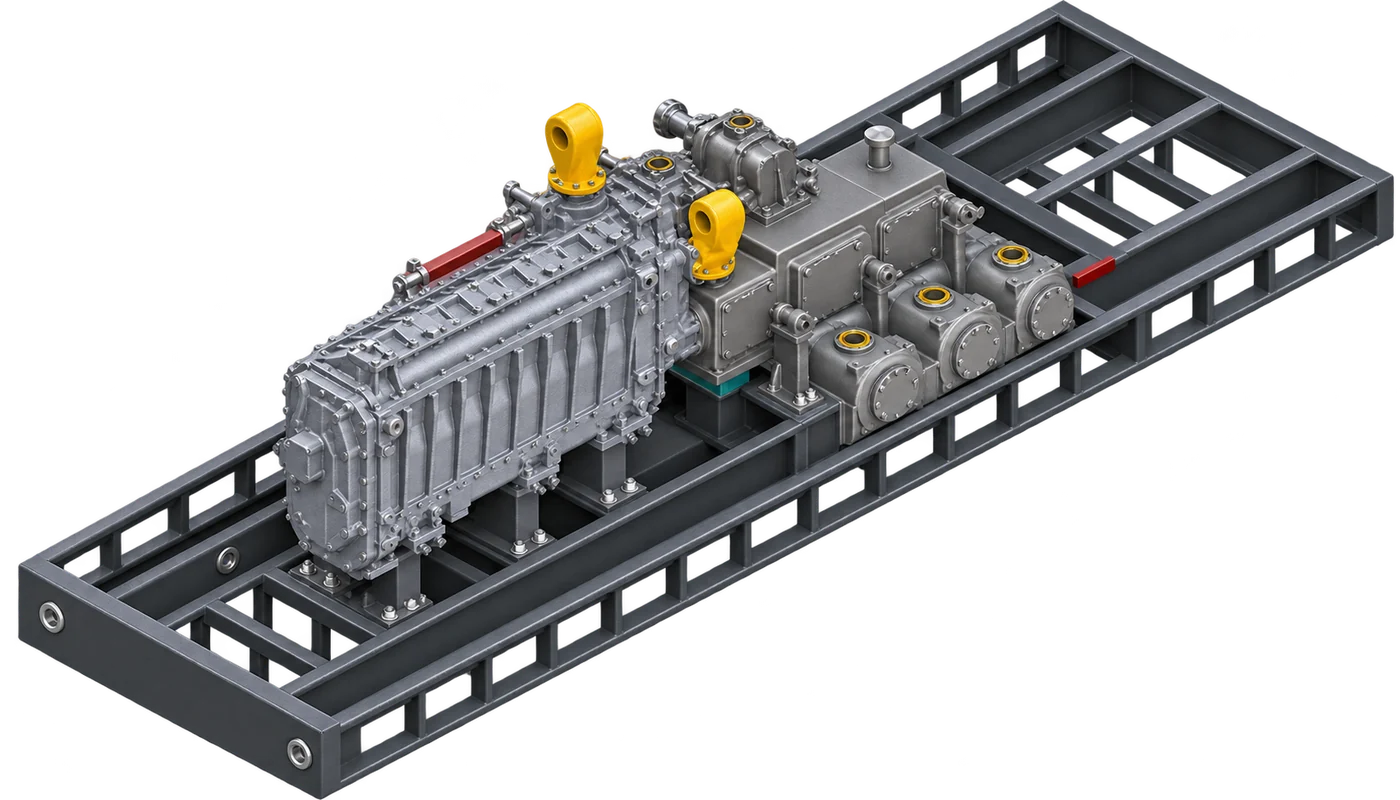
01 Skid and Equipment Model
The skid frame carries a reciprocating compressor and its engine. The 3D CAD view shows the equipment layout on the steel frame.
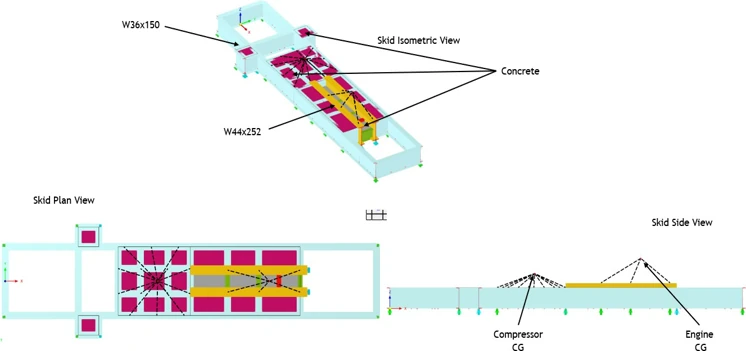
02 Natural Frequency Model
A simplified beam model of the skid, with the compressor and engine represented at their centres of gravity, was used for natural frequency and harmonic loading analysis. It gave the critical member internal forces at the failure location.
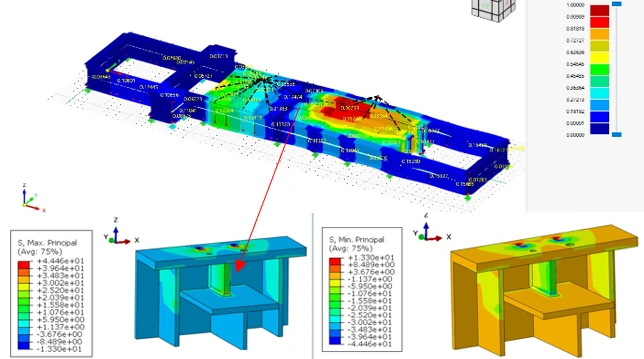
03 Connection Model and Weld Stresses
The member forces from the skid model were applied to a detailed FEA model of the cracked stiffener connection. The figure shows the critical mode shape of the skid and the resulting stress contours at the connection.
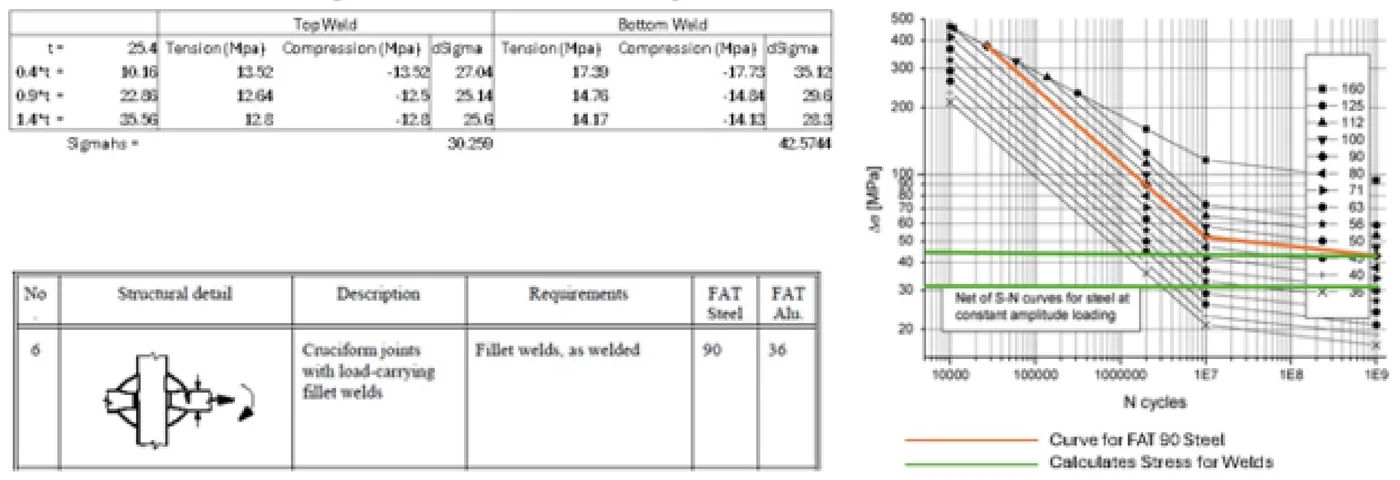
04 Weld Fatigue Check
The weld stress ranges at the top and bottom welds of the cracked stiffener connection were compared with the S-N fatigue curves for the weld detail category, a load-carrying fillet-welded cruciform joint. This check showed why the existing detail cracked and set the target for the revised stiffener detail.
Challenge, Engineering Approach & Result
Challenge
A heavy skid carrying a reciprocating compressor and engine cracked at a stiffener weld. Excessive vibration was the suspected cause, so the assessment had to cover both the whole skid and the cracked connection.
Engineering Approach
Skid-level vibration analysis gave the member forces at the failure location; a detailed connection model turned them into weld stress amplitudes, checked against fatigue limits for the weld detail category.
Result
The analysis confirmed that excessive vibration produced the weld cracking. ENA2 proposed a revised stiffener detail to improve fatigue life, and it resolved the cracking. Weld fatigue checks like this are part of our fatigue and fracture analysis services.
What an Owner Should Check When a Skid Weld Cracks
In brief: Document the cracks and collect the skid data before any repair, where it is safe to do so, and confirm that the review covers both the whole skid and the local weld detail.
- Record the location, length and photos of every skid weld fatigue crack before any repair, where it is safe to do so.
- Check similar welded details elsewhere on the skid.
- Note any vibration measurements or recent changes in operation.
- Collect the skid drawings, weld details, equipment masses and the operating speed range.
- Ask whether re-welding the same detail addresses the cause or only the symptom.
- Confirm that the review covers both the dynamic response of the whole skid and the local weld detail.
More Engineering Case Studies


Compressor Skid Vibration and Weld Fatigue FAQ
Why do reciprocating compressor skids develop weld cracks?
Weld cracks on a reciprocating compressor skid can be fatigue cracks: the engine and compressor apply cyclic forces that put repeated stress cycles on welded details such as stiffener connections. If the skid responds strongly to those forces, fatigue cracks can start at the weld. In this project, cracking at a stiffener location was attributed to excessive vibration.
How did ENA2 confirm that vibration caused the cracking?
ENA2 calculated the member forces in the skid at the failure location, applied them to a detailed model of the cracked stiffener connection and checked the resulting stress amplitudes against fatigue limits. The check confirmed that excessive vibration produced the weld cracking.
Why use both a global skid model and a detailed connection model?
A simplified beam model of the whole skid shows how it vibrates and how forces travel through its members. A detailed model of the connection then resolves the stresses at the weld, which is where fatigue is checked.
What information should I send for a skid vibration or weld fatigue review?
Send skid drawings, weld details, equipment masses and centres of gravity, the operating speed range, crack locations and photos, and any vibration measurements. Scope and schedule are confirmed per project after reviewing the inputs.
Can ENA2 visit the site and provide sealed reports?
ENA2 Innovative Consulting Inc., headquartered in Calgary, can send structural engineers on site anywhere in Alberta and British Columbia, and P.Eng.-sealed reports are available on request.