
Vibration Analysis Services
Advanced Vibration Analysis for Structural Reliability and Performance
In modern engineering systems, vibration is one of the most critical factors affecting equipment performance, structural safety, and operational reliability. Even small levels of uncontrolled vibration can lead to fatigue failures, resonance issues, reduced efficiency, and costly downtime.
At ENA2, we provide advanced vibration analysis services designed to help industries identify, understand, and eliminate vibration-related risks before they become real-world failures. Our engineering approach combines advanced finite element modeling, dynamic simulation, and practical design experience to ensure your systems perform reliably under all operating conditions.
Whether you are designing new equipment or troubleshooting an existing system, our engineering team delivers accurate insights through high-fidelity simulation and industry-proven methodologies.
We support clients across oil & gas, manufacturing, power generation, transportation, and heavy engineering sectors with reliable vibration analysis FEA solutions that improve safety and performance.
Comprehensive Engineering Solutions
ENA2 provides specialized engineering solutions for industrial, energy, transportation, aerospace, and manufacturing applications. Our simulation workflows are designed to identify critical vibration behavior early in the design cycle, helping engineering teams reduce operational risk, avoid costly redesigns, and improve equipment reliability.
Our vibration engineering capabilities include:
- Natural frequency extraction
- Harmonic response analysis
- Dynamic structural simulation
- Shock and transient analysis
- Resonance identification
- Fatigue and durability assessment
- Power Spectral Density (PSD) evaluation
- Frequency response analysis
- Coupled multiphysics simulation
- Damping and stiffness evaluation
Using advanced FEA vibration analysis, our engineers simulate real operating conditions to predict displacement, acceleration, stress distribution, and cyclic loading effects across complex assemblies and structures.
Simulation Capabilities
Natural Frequency & Mode Shape Extraction
Identifying the natural frequencies and corresponding mode shapes of a structure is crucial to avoid resonance and ensure dynamic stability. Our modal analysis fea service provides detailed insight into how components or assemblies vibrate under free or forced conditions. By pinpointing critical frequencies where amplification may occur, our vibration analysis services help engineers refine designs, improve structural robustness, and prevent fatigue failures. This analysis is essential across industries, including aerospace, automotive, rotating machinery, and infrastructure, to ensure safe, vibration-resistant operation through advanced structural vibration analysis.


Harmonic Response Analysis
Harmonic Response Analysis evaluates how a structure behaves under sinusoidal or cyclic loading across a range of excitation frequencies. This simulation helps predict resonance effects, dynamic amplification, and stress distribution caused by steady-state vibrations using advanced vibration analysis fea methods. By understanding how systems respond to continuous vibration sources—such as engines, rotating shafts, or environmental excitations—we help engineers avoid critical frequency overlaps and ensure structural durability. This service is vital for ensuring performance and reliability in equipment exposed to repetitive or high-frequency loading conditions through accurate mechanical vibration analysis.
Transient Dynamic Analysis
Transient Dynamic Analysis simulates how structures respond to time-varying or impact loads, such as shocks, drops, or pulse excitations. Unlike steady-state methods, this approach captures real-time variations in displacement, stress, and strain throughout the load event. By modeling the time history of loads, our vibration analysis services help engineers ensure system integrity, mitigate dynamic failure risks, and optimize designs for durability in demanding operational scenarios.


Random Vibration Analysis
Random Vibration Analysis simulates the response of mechanical systems to non-deterministic, broadband excitations—such as road-induced loads, turbulent airflow, or launch environments. This method is critical for components subjected to unpredictable dynamic loads over time. ENA2 uses power spectral density (PSD) inputs to evaluate fatigue damage, RMS responses, and peak accelerations. Whether designing electronics in vehicles or payloads in aerospace, our random vibration analysis ensures structural integrity, minimizes fatigue risk, and validates performance under real-world vibration spectra.
Shock Analysis
Vibration shock analysis examines how components respond to sudden, high-intensity shock pulses that occur over milliseconds and excite a broad frequency spectrum. Using time-history simulations and Shock Response Spectrum (SRS) methods, we evaluate peak accelerations, dynamic displacements, and structural stresses through advanced dynamic engineering and vibration assessment solutions. This service is critical for aerospace launch events, and the transport of sensitive equipment. It ensures designs can withstand real-world shock loading without failure, protecting structural integrity and product performance under extreme transient conditions.

Why Vibration Analysis Matters?
Excessive or uncontrolled vibration can lead to premature component failure, joint loosening, fatigue cracking, or catastrophic collapse. These dynamic issues may stem from rotating machinery, impact loads, or external environmental inputs such as road-induced excitation or seismic activity. Through advanced mechanical vibration analysis, ENA2 helps engineering teams identify potential vibration risks early in the design stage.
Key Engineering Benefits of Vibration Analysis:
- Identify Critical Resonant Frequencies: Pinpoint operational frequencies that may cause resonance, enabling early design corrections through advanced FEA modal analysis.
- Prevent Amplification Effects: Avoid dangerous amplification due to natural frequency alignment with excitation sources.
- Evaluate System Response to Dynamic Loads: Simulate real-world load cases including sinusoidal, transient, and stochastic inputs.
- Optimize Stiffness & Damping Characteristics: Fine-tune material and structural properties to shift critical frequencies and reduce vibration sensitivity.
Early-stage simulation and engineering refinement help improve durability, reduce failure risks, and ensure long-term dynamic reliability.
Industries We Serve
Our engineering solutions support a wide range of industries:
 Building, Facility & Construction
Structural and simulation support
Building, Facility & Construction
Structural and simulation support
 Infrastructure, Energy & Materials
Engineering analysis for critical assets
Infrastructure, Energy & Materials
Engineering analysis for critical assets
 Manufacturing & Industrial Equipment
Product and process optimization
Manufacturing & Industrial Equipment
Product and process optimization
 Transportation & Mobility
Performance and durability solutions
Transportation & Mobility
Performance and durability solutions
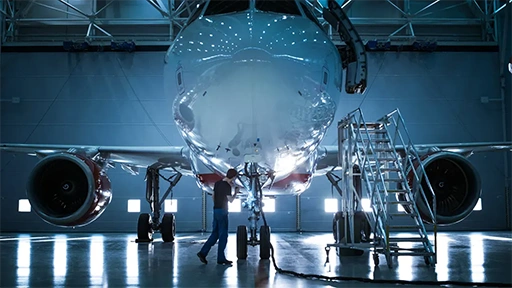 Aerospace & Defense
Advanced engineering validation
Aerospace & Defense
Advanced engineering validation
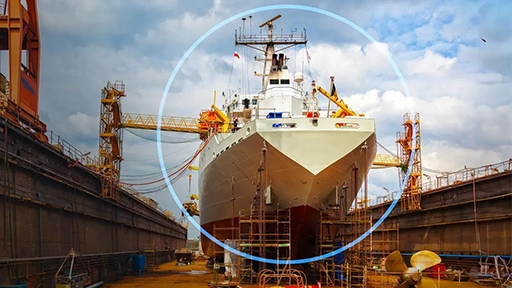 Marine & Offshore
Structural and offshore asset support
Marine & Offshore
Structural and offshore asset support
 Life Sciences & Healthcare
Simulation for regulated products
Life Sciences & Healthcare
Simulation for regulated products
 Consumer Packaged Goods
Packaging and product performance
Consumer Packaged Goods
Packaging and product performance
Each industry presents unique vibration challenges, and our engineering solutions are tailored accordingly.
Why Choose ENA2?
At ENA2, we combine practical engineering knowledge with advanced simulation capabilities to solve complex vibration challenges with accuracy and efficiency. Our engineers work closely with clients to deliver practical, simulation-driven recommendations that support faster decision-making, reduce project risk, and improve overall system reliability through advanced vibration analysis services.
Engineering teams choose ENA2 because we focus on delivering engineering solutions that are technically accurate, commercially practical, and aligned with real-world operating conditions.
Key Advantages
- High-fidelity FEA simulation expertise
- Strong focus on real-world engineering behavior
- Fast and reliable project delivery
- Clear engineering reporting and actionable insights
- Cost-effective design optimization
- Strong industry experience across multiple sectors
We don’t just identify vibration-related problems — we help engineering teams solve them through practical analysis, optimized designs, and performance-driven engineering solutions.
As trusted engineering consultants in Calgary, we support global clients with reliable simulation-based engineering solutions.
Ready to Solve Your Vibration Challenges?
Whether you need resonance evaluation, dynamic structural simulation, fatigue assessment, or troubleshooting support for excessive vibration in mechanical systems and rotating equipment, ENA2 provides engineering solutions tailored to complex operating environments.
Our team works closely with clients to improve structural reliability, optimize equipment performance, and support confident engineering decisions through advanced simulation-driven analysis backed by comprehensive Finite Element Analysis (FEA) services.
Contact ENA2 today to discuss your project requirements and speak directly with our engineering team.
Vibration Analysis Services FAQs
Why is vibration analysis important in engineering?
Vibration analysis services help prevent equipment failure, reduce maintenance costs, improve durability, and enhance system reliability under real operating conditions.
What is modal analysis in FEA?
Modal analysis is a simulation method used to determine the natural frequencies and mode shapes of structures and mechanical systems.
What is vibration analysis in FEA?
This simulation method uses finite element analysis to evaluate how structures and mechanical systems respond to dynamic loads, resonance, and operating frequencies.
What is mechanical vibration analysis used for?
Mechanical vibration analysis is commonly used to evaluate vibration behavior in rotating machinery, industrial equipment, and structural assemblies.
How do I know if my equipment has a vibration problem?
Common signs include excessive noise, unusual movement, premature component wear, loose fasteners, recurring maintenance issues, and reduced equipment performance during operation.
When should vibration analysis be performed?
Vibration analysis is typically performed during the design phase, equipment troubleshooting, product validation, failure investigation, or before deploying systems in demanding operating environments.
Which industries need vibration analysis?
Industries such as oil & gas, aerospace, transportation, manufacturing, and power generation commonly use vibration engineering solutions to improve reliability and operational performance.
What software is used for vibration simulation?
Common simulation tools include SIMULIA Abaqus, ANSYS, and other advanced finite element platforms used for dynamic and vibration analysis.
How does ENA2 support vibration-related projects?
ENA2 provides simulation-driven engineering support for resonance evaluation, fatigue assessment, structural validation, and dynamic performance optimization for complex engineering systems.