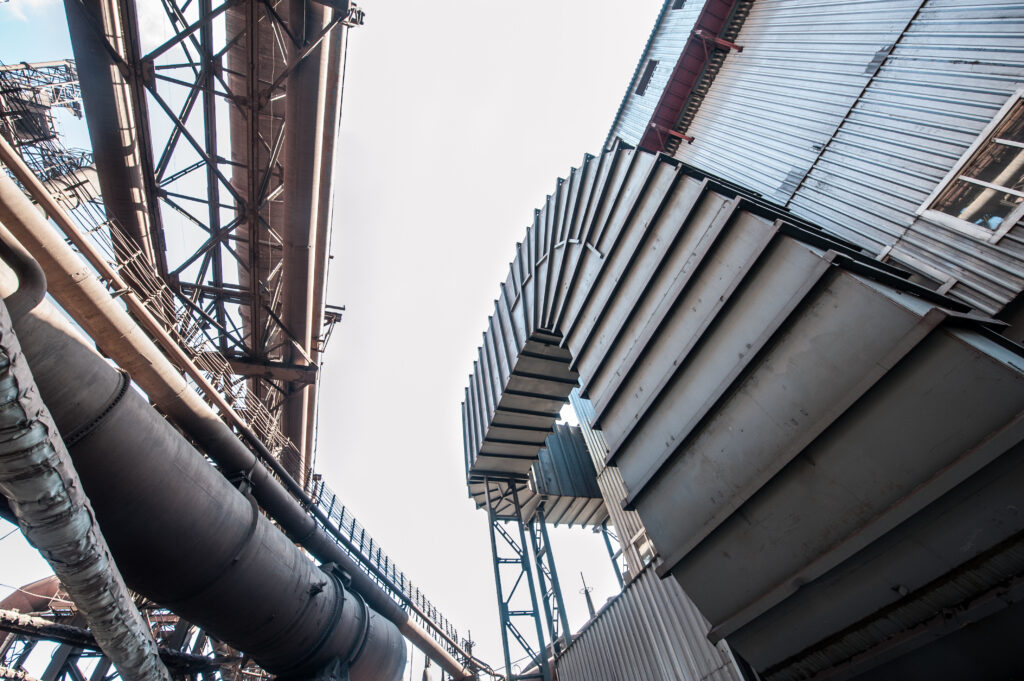
Manufacturing & Industrial Equipment Engineering Services

Manufacturing and industrial equipment engineering services focused on structural performance, thermal stability, vibration control, and long-term equipment durability.

Validate equipment strength, thermal stability, vibration performance, and operational reliability with physics-based simulations for fabrication lines, processing equipment, automation systems, and industrial machinery.

Serving manufacturers across Canada and the United States, ENA2 provides engineering consulting support for industrial equipment, process systems, thermal enclosures, and machinery that must perform reliably under repeated loading, heat, vibration, and production demands.

WHAT WE DO

Manufacturing environments demand systems that are strong, efficient, and built to endure. Whether you are designing hydraulic presses, thermal process equipment, material handling systems, or robotic automation cells, every piece of industrial equipment must perform safely under repeated loading, vibration, heat, and operating stress.

At ENA2, we help OEMs and industrial system providers simulate and validate equipment performance using Finite Element Analysis (FEA) and Computational Fluid Dynamics (CFD). From welding distortion in structural frames to airflow uniformity in thermal enclosures, cooling performance in process equipment, and flow behavior in piping or mixing systems, our engineering simulations support better design decisions and help reduce costly redesigns.

By proactively addressing failure risk, thermal buildup, flow imbalance, fatigue, vibration, and manufacturability issues, we help clients deploy optimized, field-ready equipment with stronger reliability, easier fabrication, and better long-term performance.

HOW WE DO IT

Each industrial system presents distinct engineering challenges, from fatigue in machine frames and welded structures to thermal stress in ovens, pressure imbalance in process lines, and vibration in automation or rotating equipment. At ENA2, we replicate these conditions using high-fidelity engineering simulations that show how equipment behaves under load, heat, pressure, flow, and vibration.

Our engineering team applies:

  • Finite Element Analysis (FEA) to evaluate structural integrity, fatigue life, deformation, welded-frame behavior, and thermal stress under static, dynamic, and operating loads
  • Computational Fluid Dynamics (CFD) to evaluate airflow, temperature gradients, fluid mixing, pressure loss, cooling effectiveness, and thermal management in process systems
  • Coupled simulation approaches where thermal, structural, and flow behavior interact in the same equipment system

This simulation-led approach helps reduce overdesign, limit prototype iterations, and improve equipment reliability from fabrication through full production.

Structural Stress, Fatigue, and Weldment Analysis for Industrial Equipment

Manufacturing equipment is constantly subjected to motion, pressure, heat, vibration, and fatigue. Using Finite Element Analysis (FEA), we evaluate metal frames, weldments, robotic welding systems, tanks, and press beds for structural performance under loading scenarios such as stamping, bending, material transfer, and pressurization.

We assess vibration, thermal stress, and crash/impact loads to ensure your equipment meets required service life and safety margins. For fabricated systems like storage tanks or pressure vessels, we perform nozzle load checks, lifting simulations, and installation stress reviews—all to prevent early-stage failures and support long-term operation.

Thermal and Flow Analysis for Processing Equipment and HVAC Systems

Thermal regulation is critical in manufacturing systems, from heat exchangers and ovens to hydraulic enclosures, chiller units, and temperature-sensitive process equipment. We use Computational Fluid Dynamics (CFD) to simulate heat transfer and cooling strategies in enclosed systems, identify hot spots, and improve thermal distribution across work zones, production zones, and critical components.

In facilities with integrated building HVAC, cleanrooms, or climate-controlled zones, our airflow modeling services help optimize duct layouts and balance flow rates. We also simulate fluid flow in pipes, pumps, and valves, enabling effective design for mixing tanks, pressure recovery systems, and waste stream handling—including non-Newtonian fluids.

Vibration and Acoustic Analysis for Equipment Reliability

Equipment durability is not only about static strength. Vibration, resonance, and acoustic fatigue can lead to hidden failures over time. ENA2 conducts vibration analysis and modal analysis to identify resonant frequencies, fatigue hot spots, and structural response to cyclic motion, unbalanced loading, and production-related dynamic excitation.

We also simulate mechanical acoustics in enclosures, equipment panels, silencers, and facility infrastructure, helping you meet OSHA and comfort-level noise standards while extending equipment life through better structural damping.

Additional Product and Consumer Equipment Support

For selected product-development projects, ENA2 also supports structural durability, drop, fatigue, and stability evaluations for specialized manufactured products and assemblies where performance, weight, and long-term reliability matter.

Common Manufacturing Engineering Challenges We Help Solve

Manufacturing systems often operate under a difficult combination of repeated loading, vibration, heat, thermal cycling, fluid flow, and production-speed demands. ENA2 helps equipment designers and industrial teams evaluate these problems early so they can improve performance, reduce downtime, and support more reliable operation.

  • Fatigue and distortion in machine frames, weldments, and structural supports
  • Thermal buildup and uneven temperature distribution in ovens, enclosures, and process equipment
  • Vibration, resonance, and acoustic fatigue in machinery, panels, and support systems
  • Pressure loss, flow imbalance, and poor cooling performance in process lines and thermal systems
  • Nozzle and support loading in fabricated tanks, pressure vessels, and industrial equipment
  • Manufacturability and structural reliability issues in automation systems and production machinery

Typical Manufacturing Systems We Support

Our manufacturing and industrial equipment engineering services are commonly applied to:

  • Hydraulic presses and stamping equipment
  • Welded frames, tanks, and structural supports
  • Robotic automation cells and handling systems
  • Ovens, heat exchangers, chillers, and thermal enclosures
  • Process piping, pumps, valves, and mixing tanks
  • Conveyors, fixtures, production machinery, and skid-mounted equipment

FAQs – Manufacturing & Industrial Equipment Engineering Services

1. What types of equipment benefit most from structural stress and fatigue analysis?

Structural stress and fatigue analysis is especially valuable for hydraulic presses, welded frames, robotic systems, tanks, press beds, structural supports, and other industrial equipment exposed to repeated loading, vibration, heat, or cyclic service conditions.

2. When is weldment analysis important in manufacturing equipment?

Weldment analysis is important when structural frames, supports, tanks, or fabricated assemblies may be affected by stress concentration, fatigue loading, welding distortion, or long-term durability concerns under production conditions.

3. Where does thermal-stress analysis matter most in manufacturing systems?

Thermal-stress analysis is important for ovens, heat exchangers, thermal enclosures, hydraulic housings, chiller systems, and other process equipment exposed to temperature gradients, repeated heating and cooling, or constrained thermal expansion.

4. What problems can CFD solve in processing equipment and industrial HVAC systems?

CFD can help evaluate heat transfer, airflow distribution, hot spots, fluid mixing, pressure loss, cooling effectiveness, and thermal management in enclosed systems, process lines, HVAC-integrated spaces, and equipment cooling applications.

5. When is vibration analysis needed for industrial equipment?

Vibration analysis is needed when machinery, support structures, panels, or equipment systems may be affected by resonance, cyclic excitation, acoustic fatigue, or unbalanced loading that can reduce durability or create hidden failure risks.

6. How can simulation improve the design of automation systems and production machinery?

Simulation helps evaluate structural response, fatigue life, thermal behavior, vibration, and flow-related performance in automation systems and production machinery before fabrication, allowing teams to improve reliability and reduce redesign.

7. What can nozzle load and installation stress checks reveal in fabricated equipment?

Nozzle load checks and installation stress reviews can reveal overstress, support loading issues, thermal interaction problems, and connection-related risks in fabricated systems such as tanks, pressure vessels, and industrial equipment.

8. How does simulation help reduce overdesign in manufacturing equipment?

Simulation helps identify where material use, thickness, support configuration, and structural layout can be optimized without compromising strength, stiffness, fatigue life, or operating reliability.

9. What does ENA2 deliver for manufacturing and industrial equipment projects?

ENA2 delivers simulation-led engineering support for structural stress analysis, fatigue evaluation, thermal and flow analysis, vibration and acoustic behavior, and equipment reliability improvement across industrial machinery and process systems.

10. What benefits do manufacturers gain from simulation-led engineering?

Simulation-led engineering helps manufacturers reduce failure risk, improve equipment reliability, lower prototype iterations, strengthen thermal and structural performance, and make better design decisions before fabrication and production.

Case Studies

Software Availability

Contact Us

Fill out the form below, and we will be in touch shortly.