


Selected Engineering Case Studies Relevant to Mining Projects
Explore ENA2 engineering case studies showing how FEA, CFD, fatigue assessment, structural validation, dynamic stress analysis, and simulation-led engineering support equipment reliability, wear reduction, and safer technical decisions for demanding industrial environments.
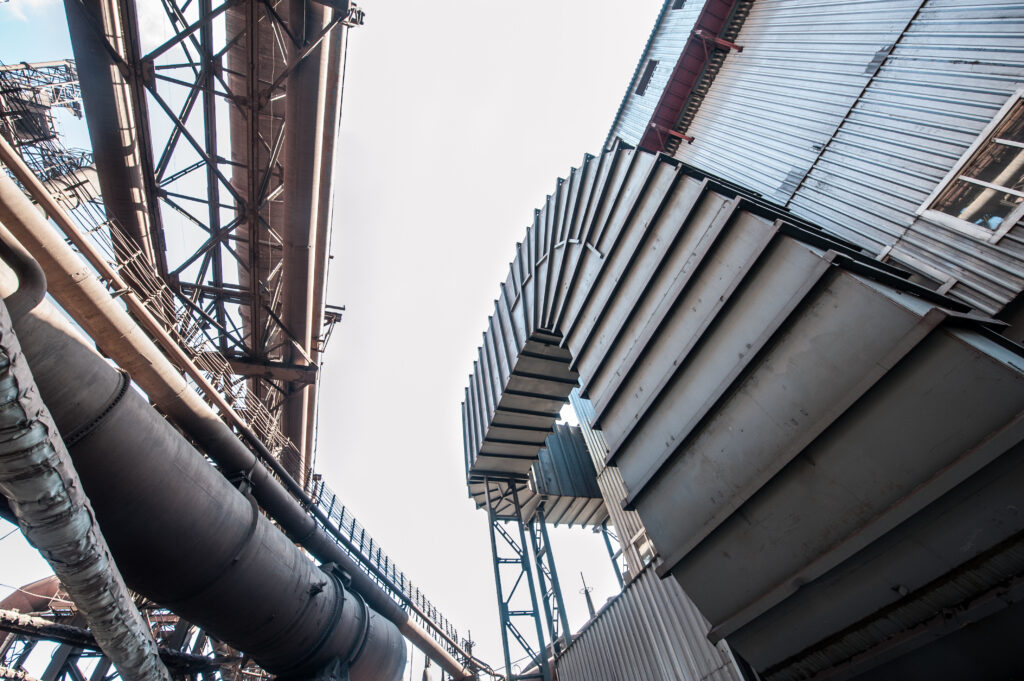 Dynamic Stress
Flow-Induced Dynamic Stress and Fatigue Analysis of an Industrial Manifold Assembly
CFD-informed dynamic stress and fatigue review for flow-exposed industrial systems.
Dynamic Stress
Flow-Induced Dynamic Stress and Fatigue Analysis of an Industrial Manifold Assembly
CFD-informed dynamic stress and fatigue review for flow-exposed industrial systems.
 Structural FEA
3D Nonlinear FEA Analysis of Pin-Column Connection
Nonlinear FEA review of structural connection behavior under demanding load conditions.
Structural FEA
3D Nonlinear FEA Analysis of Pin-Column Connection
Nonlinear FEA review of structural connection behavior under demanding load conditions.
 Fatigue Assessment
Fatigue Life Assessment of a Blow-Case Pressure Vessel
Stress and fatigue assessment for pressure equipment reliability.
Fatigue Assessment
Fatigue Life Assessment of a Blow-Case Pressure Vessel
Stress and fatigue assessment for pressure equipment reliability.
 Asset Integrity
API 579 Part 12 Evaluation of Dented Pressure Vessel
Fitness-for-service review for damaged pressure equipment.
Asset Integrity
API 579 Part 12 Evaluation of Dented Pressure Vessel
Fitness-for-service review for damaged pressure equipment.
 Structural Durability
Improving Lateral Stiffness of Composite Wall Systems Through Vertical Reinforcement
FEA validation for stiffness improvement and structural performance.
Structural Durability
Improving Lateral Stiffness of Composite Wall Systems Through Vertical Reinforcement
FEA validation for stiffness improvement and structural performance.
 Structural Safety
Frontal Impact Assessment of Driver Cabin in Bus Structure
Structural safety evaluation for impact-driven loading.
Structural Safety
Frontal Impact Assessment of Driver Cabin in Bus Structure
Structural safety evaluation for impact-driven loading.
Mining Engineering FAQ
Find answers to common questions about mining equipment durability, lifting and transport loads, thermal-stress analysis, underground ventilation, CFD slurry flow, erosion prediction, DEM bulk material handling, downtime reduction, and simulation-led engineering for mining operations.
Need Mining Engineering Support for Equipment Reliability, Slurry Flow or Bulk Material Handling?
Send us your drawings, equipment details, load cases, lifting requirements, operating conditions, slurry flow data, ventilation concerns, or material handling challenges. ENA2 can help define the right analysis path for FEA, CFD, DEM, thermal-stress, erosion, structural durability, or equipment reliability before issues become costly in fabrication, mobilization, or field operation.